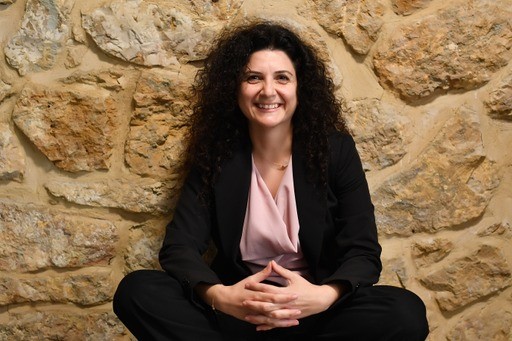
There is a story Maha Zouwayhed returns to often. Two students with similar learning disabilities, similar potential. One grew up abroad and received the support needed to finish university. The other reached grade 12 in Lebanon without the minimum skills required to continue education or pursue independent living. The difference was not in ability. It was access.
That contrast became the foundation of everything Maha has built since. Now the Director of the Zein AUB Innovation Park and of Digital Accessibility at the American University of Beirut, she has spent years working to close the gap she witnessed in that story and the many others like it she encountered in her work.
In May 2026, Forbes named her on its Accessibility 200 list, recognizing 200 global impact-makers advancing accessibility across education, technology, employment, and society. She is the only person from the Arab world on the list.
The recognition is significant, but the work behind it started long before any list. Through her work at AUB, Maha saw how barriers were rarely about disability itself. They were about inaccessible systems, inaccessible content, and inaccessible services. Students were being asked to adapt to institutions rather than institutions adapting to them. A blind student, for instance, can access learning materials, navigate platforms, and participate fully in academic life using a screen reader. But that only works when platforms and content are built in accordance with accessibility standards. The technology exists. What often does not exist is the design that lets it function.
That realization gave shape to ABLE, which stands for Accessibility for a Bolder Learning Experience. Maha started it at AUB with a clear goal: open the doors of education and opportunity through digital accessibility and accessible technology. What ABLE has become over time is broader. It grew into a platform for awareness, advocacy, capacity building, collaboration, and innovation, bringing together educators, students, developers, policymakers, employers, and organizations of persons with disabilities. One of the clearest lessons to come out of that work is that no technology, however well-funded, can substitute for culture. Progress depends on decision-makers, educators, developers, and communicators understanding their own role in creating accessible experiences and being equipped to act on it.
The outcomes have been real. AUB became home to the first university Digital Accessibility Department and Digital Accessibility Policy in the region. Hackathons were organized, training programs were developed, accessibility standards were incorporated into curricula, and a public library of recorded training sessions was built to keep knowledge accessible to anyone who wants to learn. The inaugural ABLE Summit drew 1,250 registrations. Forty volunteers from the IT department and student community made it run without a fault. What started as a concern within one institution became a regional conversation. “It always takes a village,” Maha says, and she means it. Every global expert who has spoken at the ABLE Summit came as a volunteer.
When Forbes named her on the Accessibility 200, the feeling she describes is gratitude more than pride. Gratitude toward the early supporters who believed before there was any traction. Gratitude toward the collaborators, the advocates, the students who showed up. Being the only name from the Arab world on the list matters to her not as a personal distinction but as a signal. It puts visibility on a movement that has been building across Lebanon and the wider region, and it raises a question worth asking: What is the current state of that movement?
Her answer is honest. Progress has been real. Awareness of digital accessibility has grown across universities, government entities, companies, and technology communities. More institutions are providing services and accommodations for students with disabilities. Lebanon, she notes, has achieved all of this without legal mandates. In the EU, the UK, the USA, and several Arab countries, accessibility compliance is enforced by law. In Lebanon, it has been driven by people who chose to show up. That is worth acknowledging. The most urgent need now is governance: clearer ownership, stronger regulatory frameworks, and accountability mechanisms that move accessibility from individual champions to institutional systems.
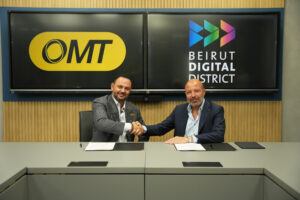
BDD has been part of that journey. Through the AI for Accessibility Hackathon, community‑building activities, and ongoing collaborations, BDD helped bring digital accessibility to new audiences, create spaces for honest dialogue, and connect a wider network across the ecosystem.
For Maha, those partnerships reinforced something she already believed: accessibility is not only a social responsibility. When technology is designed inclusively from the beginning, it becomes one of the most powerful enablers of participation and independence. Inclusion and innovation are not in tension. They point in the same direction.
Looking ahead, Maha’s goal is quiet but significant. She wants digital accessibility to stop being a specialized initiative and become simply part of how things are built. Part of how professionals are trained. Part of how content is created and services are designed. At AUB, the next step is the Tech for Impact Lab, a space for student experiential learning and innovation in accessibility and assistive technology. If the work goes the way she hopes, more graduates with disabilities will enter those fields, optimize them, and carry the work forward from lived experience.
“Accessibility is a journey, not a destination”, she says. “The goal is not a finish line. It is a way of working.”