Every surgical procedure generates a remarkable volume of data; workflow patterns, turnover times, instrument movements, and clinical decision points. Yet for decades, almost none of it was captured in any meaningful way. It disappeared when the doors of the operating room closed, leaving hospitals with incomplete records, clinical teams with no visibility into where delays were forming, and health systems with no way to learn from what was happening in their own ORs. Proximie, the global healthtech company founded at Beirut Digital District, has spent years changing that. Their recent collaboration with NVIDIA marks a significant new chapter in that work.
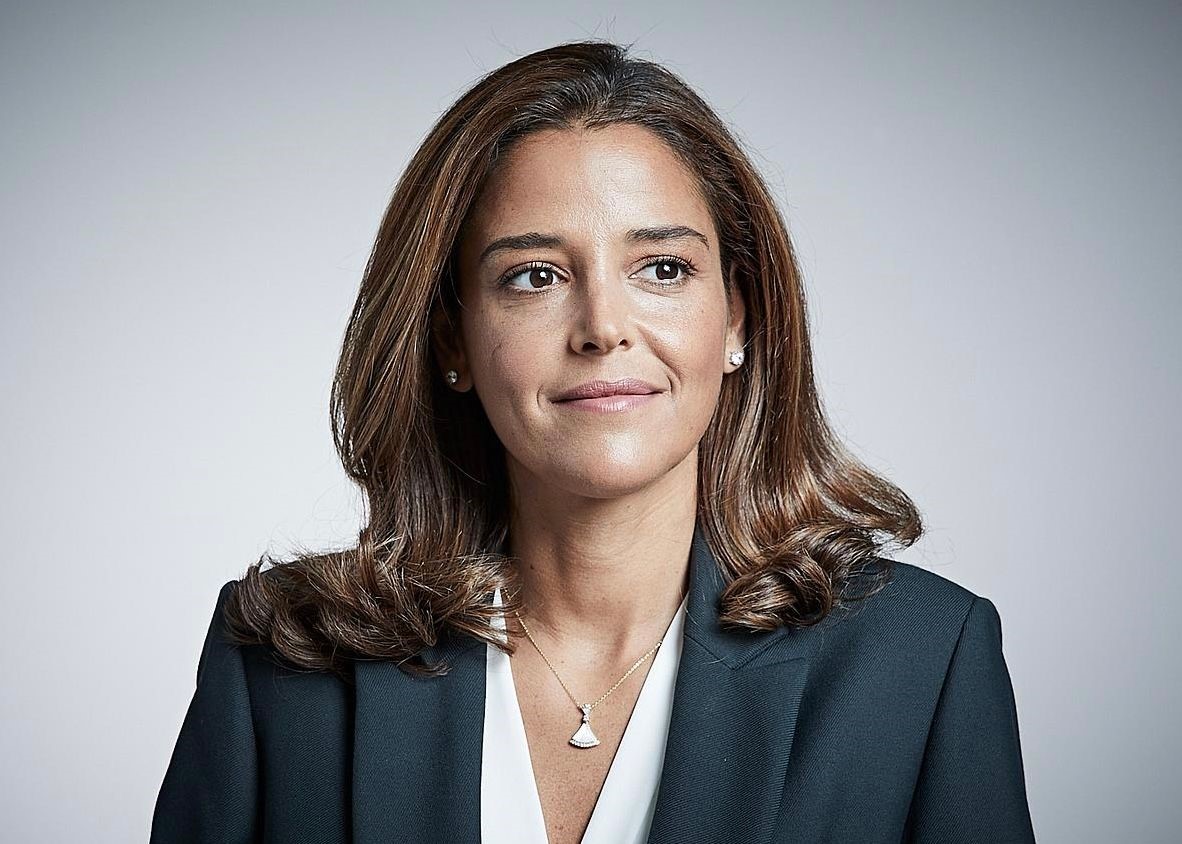
We sat down with Dr. Nadine Hachach-Haram, Founder and CEO of Proximie, to understand what the NVIDIA partnership means in practice, how the company has grown from a remote surgical collaboration tool into the operating system for intelligent operating rooms, and what the future of surgery looks like when the room itself starts to understand what is happening inside it.
“Proximie is now collaborating with NVIDIA through Project Rheo to train AI systems that can understand OR workflows and anticipate clinical needs. What does this partnership actually unlock?”
Dr Nadine Hachach-Haram:
“The foundation of this collaboration is the data infrastructure we have spent years building inside real operating rooms. Every surgical procedure generates data on workflow patterns, turnover times, and surgical decision-making, yet much of it has historically remained fragmented across siloed systems or simply lost once the procedure ends. At Proximie, we have built one of the world’s largest databases of real-world surgical intelligence across hundreds of hospitals and multiple specialties, and that foundation is what our collaboration with NVIDIA is built on.
Through Project Rheo, NVIDIA’s initiative to develop healthcare robotics and intelligent clinical environments, we are using that surgical data to train AI systems that can genuinely understand what is happening inside an OR in real time. NVIDIA provides the foundational AI infrastructure, including Cosmos-H, its foundation model for generating synthetic data for surgical settings, as well as the compute needed to make our data AI-ready at scale. Together, we are developing vision-language models that can recognize key surgical milestones in real time and trigger action across the surgical pathway.
The moment is right because the technology has finally caught up with the need. ORs account for up to 40 percent of hospital costs and are the single biggest lever for improving surgical throughput. Health systems globally are being asked to treat more patients with the same or fewer resources, and the surgical workforce is under sustained strain. Systems that can see, understand, and act inside the OR are no longer a future ambition. They are an immediate necessity.”
“For someone outside the operating room, what does “OR intelligence” actually look like, and why does it matter for the patient on the table?”
Dr Nadine Hachach-Haram:
Dr Nadine Hachach-Haram: “Most ORs today are running on expertise and instinct. The surgeon focuses on the procedure, the perioperative nurse anticipates what will be needed based on years of experience, the anesthetist monitors the patient, and the coordinator tries to keep the schedule moving. Through all of it, the room itself knows nothing. It cannot tell whether a delay is forming, whether the next case will start on time, or what the team will need in the next five minutes.
OR intelligence means the room starts to carry some of that burden. Using computer vision and AI trained on real surgical data, the environment can recognize where a procedure is in real time, anticipate what the team will need, and trigger the right support before anyone has to ask for it. That might mean a robotic assistant preparing instruments ahead of time, or a notification that the list is running behind so that staff can act rather than react, or a precise automated record of the entire procedure generated without anyone having to document it manually.
For the patient on the table, the effect is concrete. Teams are better prepared, last-minute scrambles are reduced, and turnover time between cases improves. When you reduce that friction consistently, you treat more patients, and the people waiting, sometimes for months, get the care they need sooner.”
“Proximie was founded at Beirut Digital District. How much does that origin still shape the company?”
Dr Nadine Hachach-Haram:
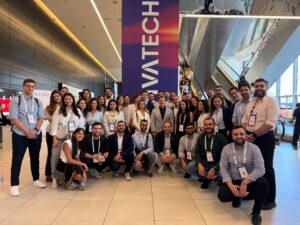
“I trained as a surgeon in Lebanon and the UK, and in both settings, I kept coming back to the same problem: surgical expertise is not evenly distributed across geographies. The best knowledge tends to concentrate in a small number of centers, and patients outside them may receive less optimal care. That felt solvable, and BDD was where I began working to address it.
BDD gave me a particular kind of ambition. The people building companies there were often solving local problems, but with an instinct that those solutions could scale globally. Being in that environment early on shaped how I framed Proximie. Not as a tool for one hospital or one country, but as a platform that could work anywhere, whether in a well-resourced hospital in London or a facility in Kenya with limited bandwidth and no specialist on site.
Working in Lebanon gave me an early appreciation for resourcefulness. You learn to build with what you have, adapt quickly, and stay focused on what you are creating rather than what might stand in the way. That mindset has stayed with me throughout, and I do not think Proximie would look the way it does without it.”
“Proximie has grown from a remote surgical collaboration tool into what you call the operating system for intelligent operating rooms. What drove that evolution?”
Dr Nadine Hachach-Haram:
“The original idea was straightforward: if you could connect surgeons remotely, you could move expertise without moving people. A senior surgeon in London could guide a procedure in Nairobi, and the knowledge previously locked in a few elite centers could start to reach the places that needed it most. That capability is still at the heart of what we do.
But the more time we spent in the OR, the more clearly we could see a different, more significant problem. ORs account for around 35 to 40 percent of hospital costs, yet they were running largely blind. Decisions about scheduling, staffing, and patient flow were being made using incomplete, often retrospective data, and nobody could see in real time where delays were forming or why lists were overrunning. Inefficiency was invisible until it was too late.
We had the infrastructure inside those rooms and could capture the data, so the question became what we could do with it. That led us to build the Intelligence Suite, an ambient AI layer that continuously captures intraoperative and workflow data, surfaces real-time insights, and helps clinical teams act on what is actually happening. It was one of the most important strategic steps we have taken, and it felt like a natural evolution driven entirely by proximity to the real problem.”
“You have supported over 13,000 surgeries across more than 50 countries. Is there one moment from that journey that puts the impact into perspective?”
Dr Nadine Hachach-Haram:
“The one I keep coming back to is from our obstetric safe surgery program in Makueni County, Kenya. Kenya has around 300 surgeons for a population of more than 55 million people, which means geography is a clinical determinant. Whether a woman requiring obstetric surgery receives safe care often comes down to whether there is someone with the right skills close enough to help.
Through Proximie, local surgeons could connect in real time with specialists, receive mentorship during live procedures, and build skills that stayed in their communities long after the program ended. When we started, there was one mentorship session a month. By the time things were running at pace, there were twelve. Training capacity had increased by 820 percent.
When we measured OR performance separately across partner health systems, we found that 19 to 25 percent of OR time was lost not to clinical complexity but to delays nobody could see. One of our hospital partners took that data, changed how their lists ran, and proved that an extra procedure per list was possible with no additional OR time and no extra staff. The capacity was there all along. It just was not visible. Behind every one of those recovered cases is a patient who was treated sooner, and a team under a little less pressure that drives overtime, cancellations, and burnout.”
“Where does the intelligent operating room go from here, and what is Proximie’s role in shaping that future?”
Dr Nadine Hachach-Haram:
“The first chapter of OR intelligence has been about making what goes on in the OR visible. Capturing what is happening and giving clinical teams the real-time data they have historically lacked. That alone changes how decisions are made, and the impact is already significant.
The next chapter is about action. Through Project Rheo and our work with NVIDIA, we are developing the infrastructure for an OR where AI and physical robotics work together, with one layer seeing and understanding the surgical environment in real time, and robotic systems acting on what it understands by preparing instruments, retrieving equipment, and supporting the team before they have to ask.
Proximie’s role in that future is to be the data and intelligence foundation that makes it possible. As one of the leading global platforms capturing intraoperative and wide-field OR video, our clinical breadth is what gives AI systems the grounding they need to understand surgery as it actually happens rather than as a controlled simulation. The goal is an OR that learns from every procedure and helps health systems treat more patients safely, in every setting where surgery happens.
That is what we are building. And the conviction behind it has not changed since the early days at BDD: every patient, regardless of where they are in the world, deserves to be safe.”