There is a moment many people in this region know well. Not a dramatic one. Just the quiet, unsettling realization that the number on your phone screen is not the same as money in your hand. That what most people call savings is, more precisely, a claim. A promise. And that promises, as Lebanon learned in 2019, can be broken.
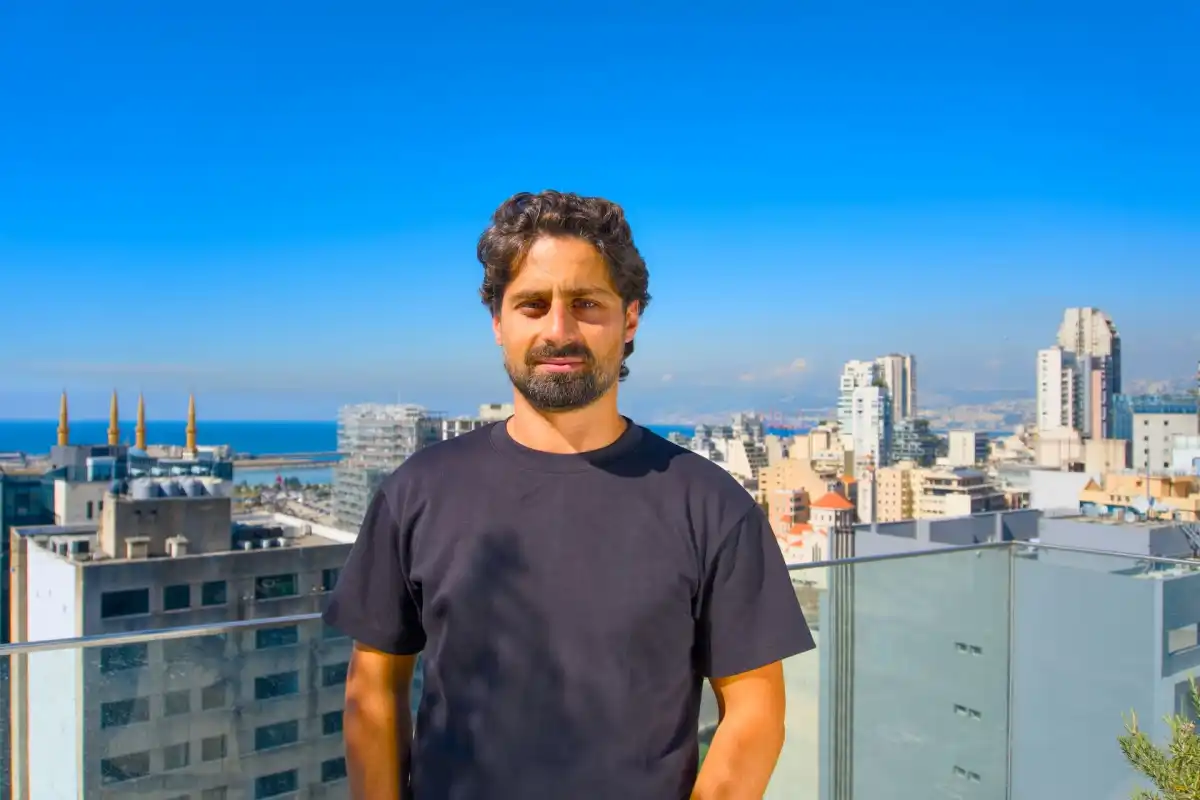
That realization is how Sovra was born. The BDD-rooted fintech startup recently closed over $2M in pre-seed funding, led by Pharsalus Capital, with backing from the founders of Ramp, Lean Technologies, and 21Shares. The raise is a milestone, but the story behind it starts much earlier and closer to home. We spoke with founder Ahmad Wehbi about the problem, the product, and what comes next.
BDD: “Sovra was born out of watching Lebanon’s banking system fail. How much of that moment still lives in what you’re building today?”
AW: “Almost all of it, and directly. What stayed with me was the realization that access and ownership are not the same thing. Most of the time, it does not matter. Your money is where the screen says it is. Then one day it is not, and you learn you had a claim, not the money.
So we asked whether people needed to hand over custody at all. The answer, now, is no. You can hold dollars yourself, plug into the global financial system, and still send, earn, spend, and transact from your phone. Only you can access them. Nobody at Sovra can move your money because we are not built to do so. If the company disappeared tomorrow, your balance would still be exactly where you left it. Everything was built around that single constraint, starting with the name.”
BDD: “Self-custody is a concept most people have never heard of. How do you explain it to someone in MENA who just wants their money to be safe?”
AW: “I try not to start with the words self-custody, because most people do not think about their money in those terms, and they should not have to. What I say instead is simple. Today, when you keep money somewhere, someone else is holding it for you, and you are trusting them to hand it back when you ask. Most of the time, that works. But it is their decision, not yours, and you have little protection when it goes the other way. Plenty of people in our region have learned that firsthand.
Self-custody means that the arrangement is gone. You access your money directly. Sovra cannot freeze your account or lock you out, because we are not holding anything to freeze. The technology behind this is sophisticated, but our whole job is to make complex infrastructure disappear behind something anyone can use. You do not need to understand keys any more than you need to understand how a card reader works to buy a coffee. You only need to know one thing: your money is yours, and it answers only to you.”
BDD: “The investors who backed you include founders of Ramp, Lean Technologies, and 21Shares. What does that group tell you about where Sovra is positioned?”
AW: “Our investors saw two things. The depth of the problem, and the fact that the technology to solve it now exists. The people who backed us have built world-class products themselves and seen firsthand what technology can do for real-world problems. Property rights and personal sovereignty are fundamental, and for the first time, they can be built into how money is held rather than promised on top of it. What they backed was the relationship that becomes possible when the intermediary steps back: a direct one, between people and their money.
Where Sovra sits now is the last mile. Taking that technology and making it simple enough for anyone to use, in a way that fits how they already live and handle money. Many of our investors have built in, or for this region, so they understood the depth of the need without it being explained to them.”
BDD: “Two-thirds of MENA adults remain unbanked or underbanked. Remittances across the region still cost over 6% per transfer. Who does Sovra reach first?”
AW: “Sovra is for anyone who uses money. But the people it will reach first are those earning in dollars while living outside the system meant to serve them. A freelancer paid by clients abroad. A remote worker whose salary arrives from another country. Someone supporting a family across a border.
They are not shut out for lack of money or ambition. They are shut out because services wrote off entire countries in our region. In those places, the conditions never changed: trust in institutions is low, the cost of sending and spending is high, and moving your own money can take days. What changes on day one is concrete. A dollar account from almost anywhere, with no bank account required to start. Dollars that earn while they sit there. A card accepted in over 180 countries, and transfers that cross borders in minutes for a fraction of what they cost today. Money that used to leak away in fees and delays stays yours.”
BDD: “Where does the over $2M go, and what does Sovra look like 12 months from now?”
AW: “First, building the product. Making it intuitive, so that everything difficult about it disappears behind something anyone can pick up and understand. And getting it into people’s hands: making them aware it exists, and giving them what they need to use it with confidence.
Twelve months from now: launch well, earn that first deposit, and become the account people reach for every day. Refine the product against real feedback. Widen what it can do so people can reach more of the global financial system. Work further into how they handle money day-to-day, then start gearing up for growth.”
BDD: “The founding story is rooted in Lebanon and the BDD community. How has that shaped the company?”
AW: “I spent years working on this kind of infrastructure with colleagues in the West, building things for a global market while feeling disconnected from the place that needed them most. That place was here. Building close to home, connecting with others who see the potential of this technology and are willing to jump on board the journey, has been rewarding. It keeps us close to the problem we are solving and the people we are building for.
At the same time, Sovra was built to travel. The team’s background spans McKinsey, Revolut, and Jumpcloud. We are incorporated in Delaware with a team distributed across the Middle East and Europe. Lebanon is where I saw the problem up close, but the roots give us conviction, and the reach lets us carry it to millions of people across MENA and beyond, whoever they are and wherever they were born.”