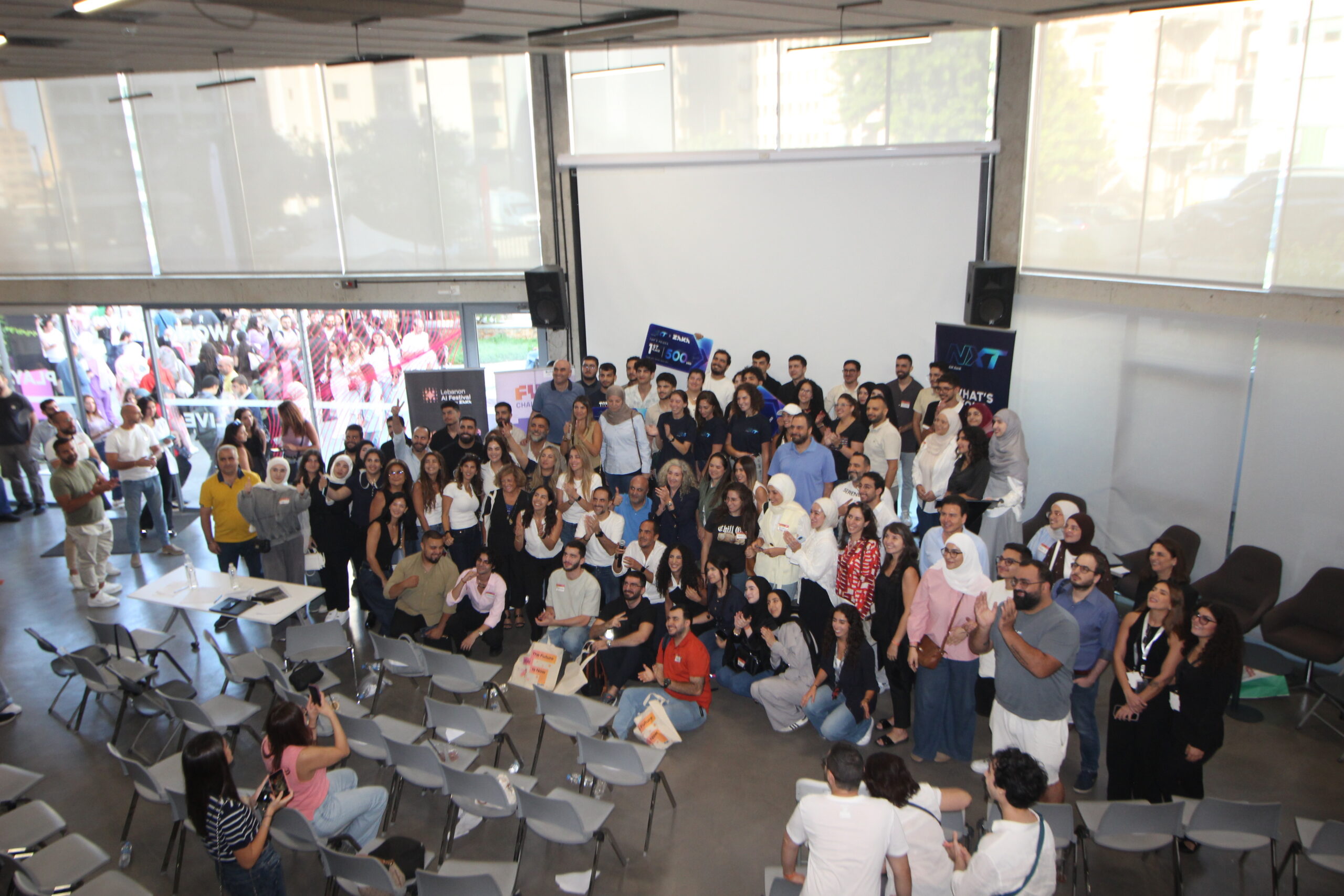
Building on the momentum of last year’s AI Career Fair at BDD, this year’s edition expanded into a larger festival format, with sessions and activities taking place across the BDD campus.
The festival featured panel discussions, technical workshops, non-technical workshops, and networking opportunities throughout the day. Attendees explored how AI is being built, adopted, and applied across different industries and professions, while connecting with others across Lebanon’s growing AI ecosystem.
Opening the Conversation Around AI in Lebanon
The day opened with remarks by H.E. Kamal Shehadi, Minister of State for Information Technology and Artificial Intelligence; Kim Mouawad, Chief Growth Officer at Beirut Digital District; and Larissa Abi Nakhle, Co-founder & Head of Partnerships at ZAKA.
Kim Mouawad, Chief Growth Officer at Beirut Digital District, highlighted the role people will play as AI continues to evolve:
“The future of AI will not only be shaped by technology, but by people who are curious enough to learn, brave enough to adapt, and ambitious enough to build. And this is where Lebanon has something truly special: As always, its talent.”
Her remarks reflected one of the key themes of the day: technology may be evolving quickly, but the people learning, adapting, experimenting, and building with it will ultimately determine its impact.
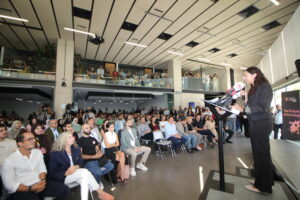
Larissa Abi Nakhle, Co-founder & Head of Partnerships at ZAKA, also emphasized the role Lebanon’s community can play in shaping what comes next:
“The future of AI in Lebanon will not be decided somewhere else by someone else. It will be decided in rooms like this one.”
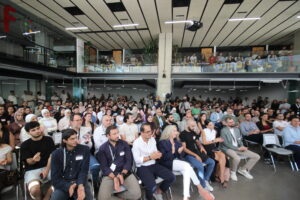
The message resonated with the mix of people gathered at BDD, which included government and business leaders, educators, founders, developers, professionals, and students.
Building, Scaling and Adopting AI
The Main Stage hosted two panel discussions tackling some of the questions emerging as AI becomes more embedded in businesses and organizations.
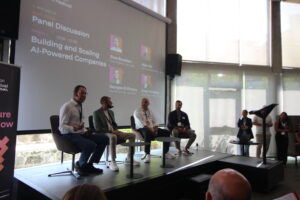
The first, “Building and Scaling AI-Powered Companies,” brought together Alexi Akl, SVP of Solution Delivery at Aboard; Georges El Khoury, Founder & CEO of Journable; and Omar Hmaissy, Chief Product Officer at Toters, moderated by Elias Boustani, Chief AI Officer at Zeal.
The discussion focused on the experience of building AI-powered products and businesses, as well as the considerations that come with scaling them in a rapidly changing technology landscape.
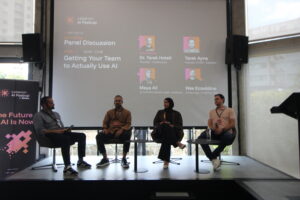
The second panel, “Getting Your Team to Actually Use AI,” focused on AI adoption within organizations.
Moderated by Tarek Hoteit, Founder of Arabtronics, the discussion featured Tarek Ayna, Founder & CEO of Edgebot; Maya Ali, AI Transformation Lead at maids.cc; and Wes Ezzeddine, Co-founder of AI Safety UAE.
The conversation examined what AI adoption looks like in practice, particularly as organizations consider how new tools can become part of everyday workflows and how teams can engage with them effectively.
Together, the discussions highlighted two increasingly important aspects of AI: building technology that delivers real value and creating the conditions for people to use it effectively.
Learning Through Practical AI Workshops
Technical workshops gave attendees the opportunity to explore AI in a more practical setting.
Sessions covered topics including AI agents, tool-calling, and AI-assisted software engineering, giving participants a closer look at the tools and approaches being used to build with AI.
One session, “Beyond the Chat Box: The Tool-Calling Loop,” explored how AI systems can interact with external tools, while another technical workshop focused on software engineering with AI, including agentic coding and production-ready development.
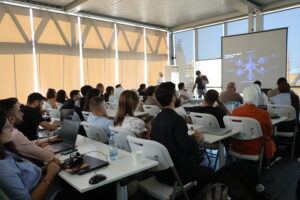
These sessions complemented the Main Stage discussions with opportunities for attendees to engage more deeply with the technical side of AI.
A separate non-technical track explored how AI is becoming relevant across a growing range of industries and professions.
Workshops covered applications in architecture, product management, classroom management, and AI-powered marketing, demonstrating how AI tools can support different types of work without requiring participants to have a technical or coding background.
The sessions gave attendees an opportunity to look at AI through the context of their own fields and consider practical ways the technology could fit into their work.
With technical and non-technical sessions running throughout the festival, attendees could choose the topics most relevant to their interests, experience, and professional backgrounds.
A Growing AI Ecosystem
Last year’s AI Career Fair demonstrated the growing interest around AI, skills, and opportunities in Lebanon. The Lebanon AI Festival 2026 built on that momentum with a broader program addressing the technology itself, its applications, its adoption within businesses, and the people building with it.
As Larissa Abi Nakhle shared during the opening:
“The future is not something that simply happens to us. It is something we build.”
Bringing more than 1,000 attendees together across BDD highlighted that idea and the value of creating physical spaces where Lebanon’s tech community can meet, learn, exchange knowledge, and build meaningful connections.